
Cuvier's from Cape to Canyon
September 16, 2022
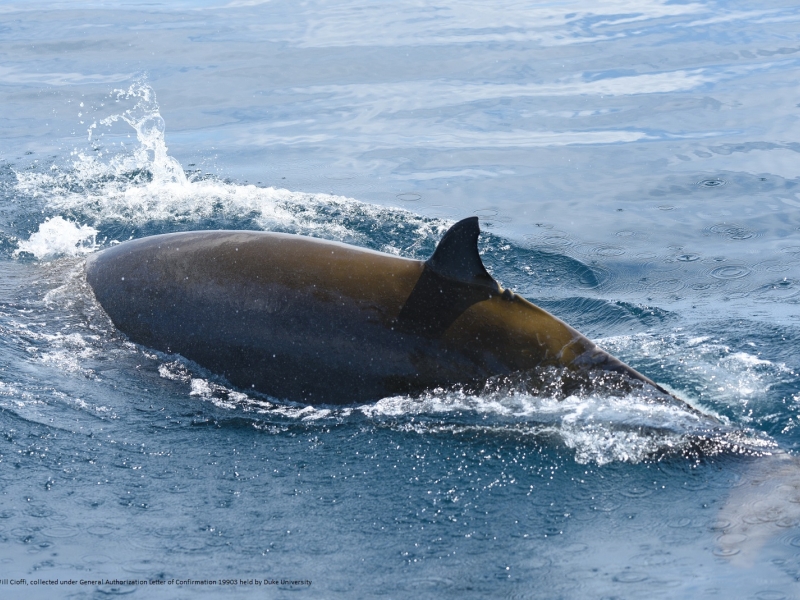
Photo ID match of a Goose-beaked whale between Cape Hatteras and Virginia Beach after two years.
Atlantic BRS – 2022 CEE with the USS Farragut
August 26, 2022
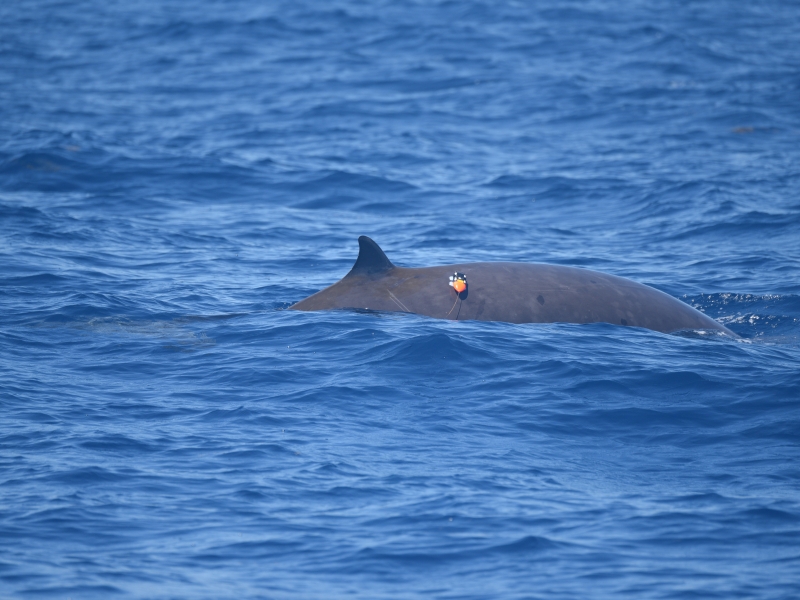
A controlled exposure success story using a Navy ship.
Atlantic BRS - First CEE of 2021
August 9, 2021
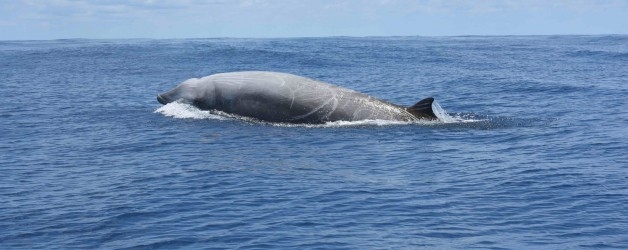
A team of researchers and Navy staff recently completed the first controlled exposure experiment of the 2021 field season for the Atlantic Behavioral Response Study.
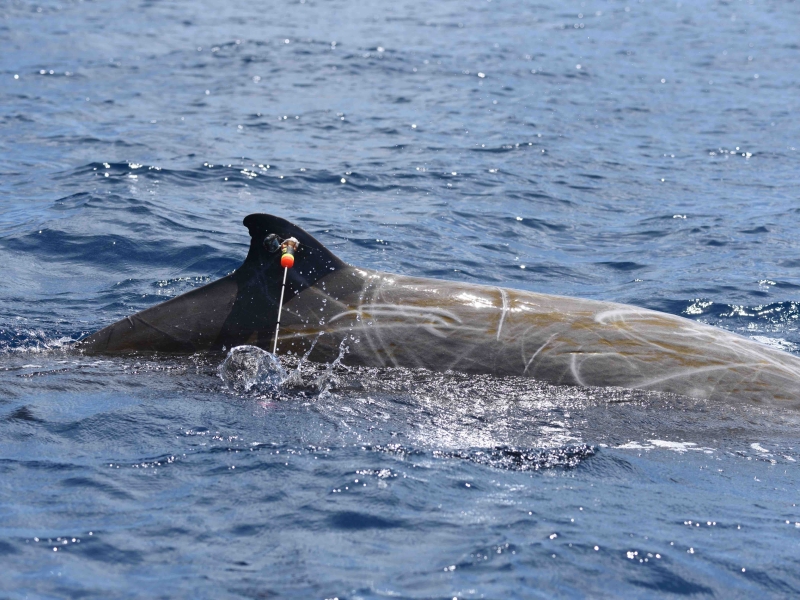
Atlantic Behavioral Response Study kicks off 2021 field season
July 13, 2021
The Atlantic Behavioral Response Study kicked off the 2021 field season last week by deploying the first round of satellite-linked telemetry tags on Cuvier's beaked whales.
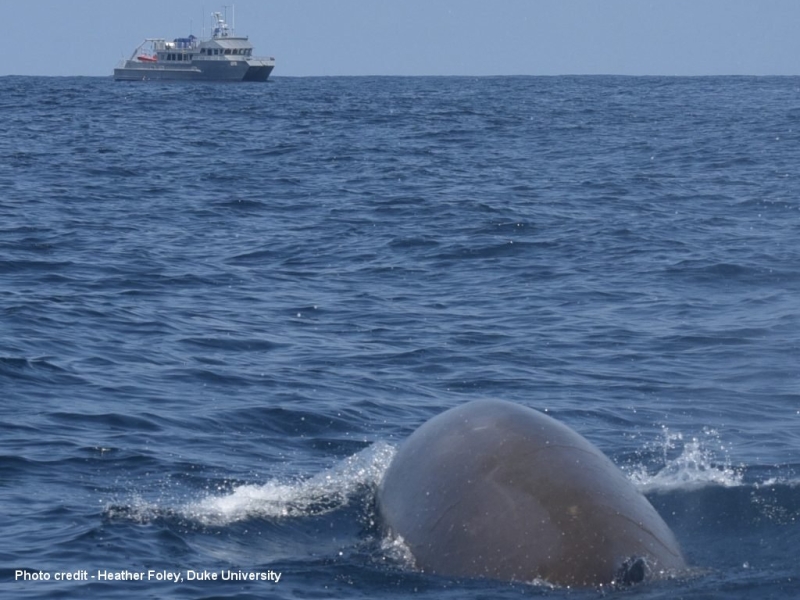
Atlantic BRS - First CEE of 2020
July 17, 2020
The first CEE of 2020 overcame the challenges of COVID-19.
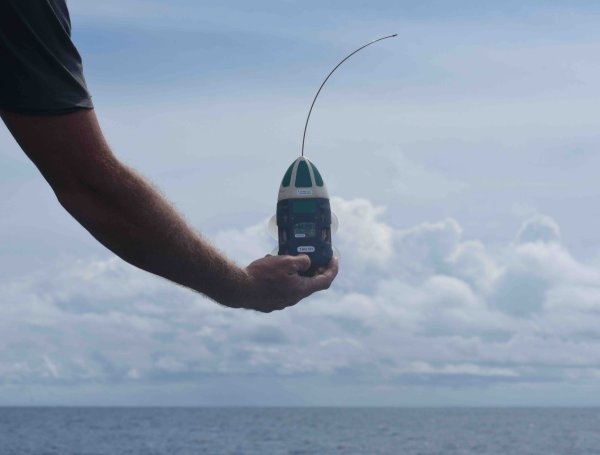
Atlantic BRS - Multi-scale CEE Success!
August 15, 2019
The first CEE while two different tag types were deployed.
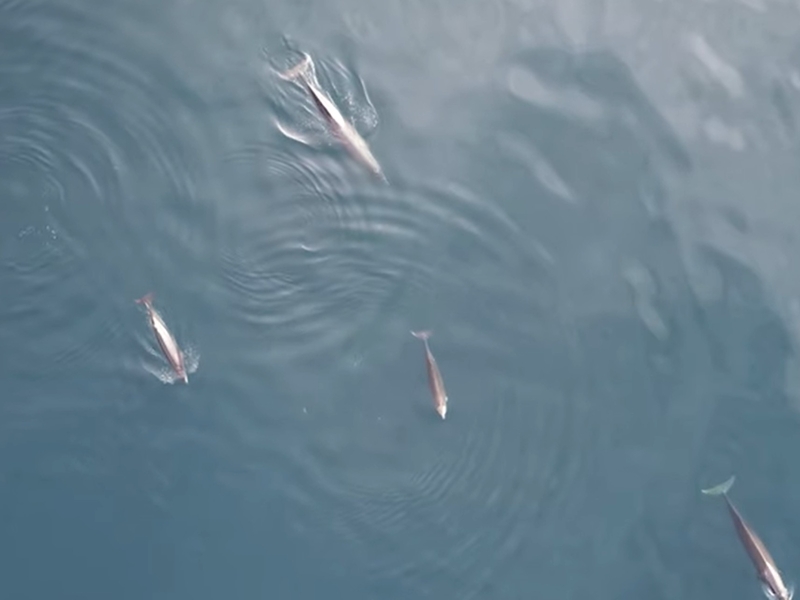
Sowerby's beaked whales encountered at Norfolk Canyon
January 7, 2019
Excellent drone footage of a group of rarely seen beaked whales.
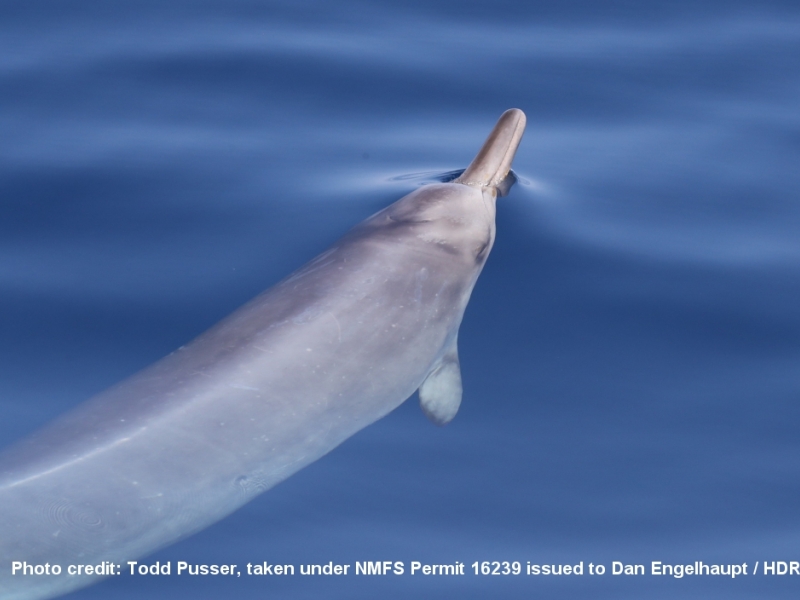
Sowerby's beaked whale tagged offshore of Virginia
September 12, 2018
A rarely seen beaked whale was tracked offshore.
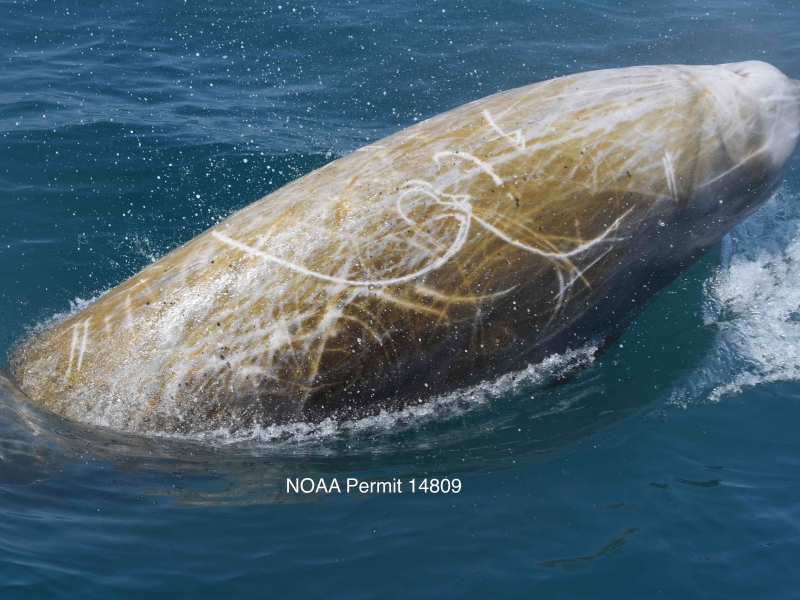
Atlantic BRS 2018 Field Work is Underway
May 18, 2018
The 2nd year of Atlantic BRS has begun.
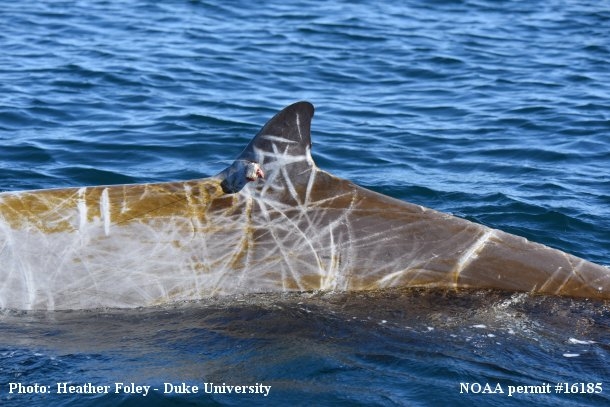
Hatteras tagging wraps up for 2015
November 10, 2015
The finale of a successful field season.
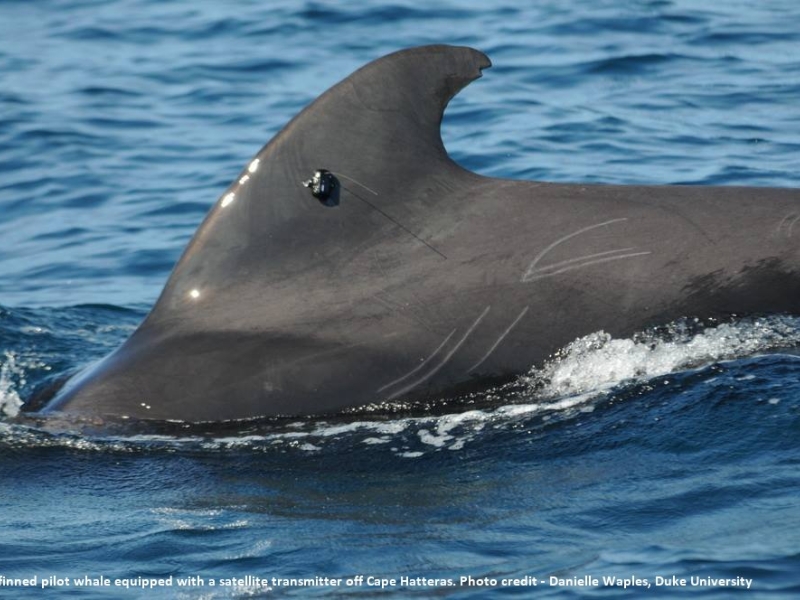
Tagging Deep Diving Odontocetes Off Cape Hatteras - Part 3
September 26, 2014
Details on the 3rd field session for the year.
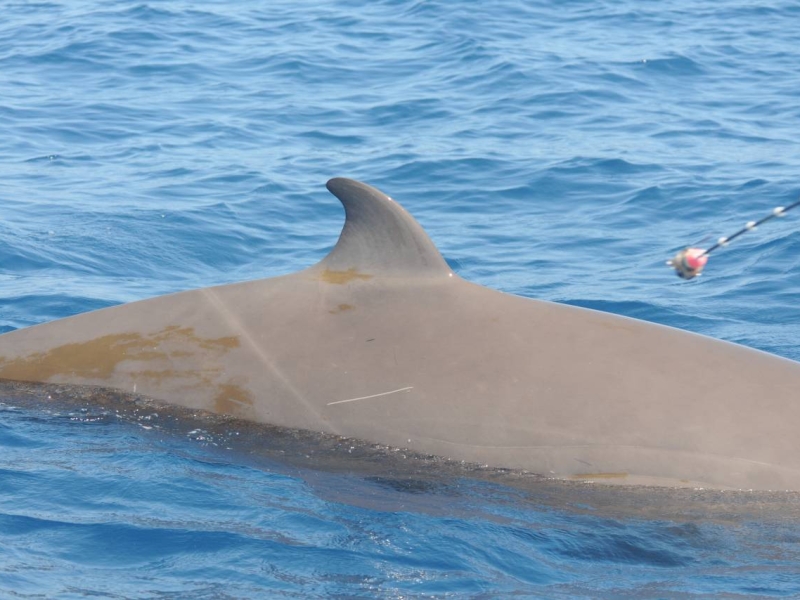
Tagging Whales Off Cape Hatteras
May 21, 2014
Learning about the movements of odontocetes.
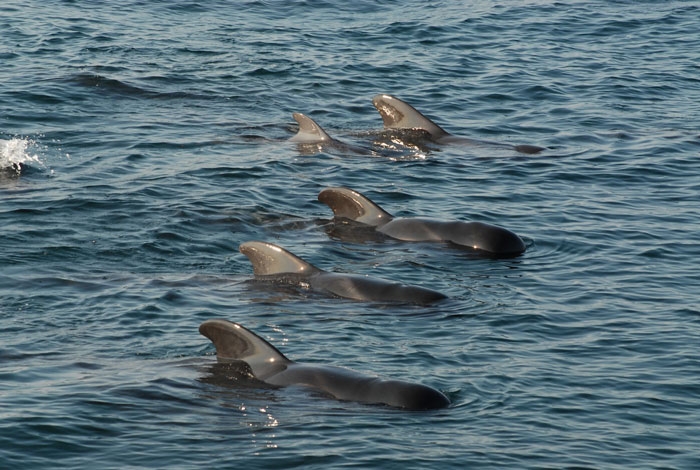
Cape Hatteras Field Work Update
October 28, 2013
Calm days at sea off NC.
Current
Pacific Islands Comprehensive Stranding Investigations
Project Objectives
Conduct comprehensive investigations of stranded marine mammals throughout the Pacific Islands with emphasis on the Hawaiian and Mariana Island chains. This includes conducting necropsies of stranded animals, collecting and archiving samples, conducting disease screening, genetic testing, and analysis of historical data. The objective is to examine stranding patterns and causes of death for marine mammals in the Pacific Islands.
More details
Collapse details
Date Published:
Filesize:
- January 1, 2018
Passive acoustic monitoring was conducted using High-frequency Acoustic Recording Packages (HARPs) deployed in waters offshore of Virginia, North Carolina, and Florida with support from the US Navy during 2016 - 2017. The HARPs recorded underwater sounds between 10 Hz and 100 kHz. Data analysis consisted of analyst scans of long-term spectral averages (LTSAs) and spectrograms, and automated computer algorithm detection when possible. Three frequency bands were analyzed for marine mammal vocalizations and anthropogenic sounds: (1) Lowfrequency, between 10-1000 Hz, (2) Mid-frequency, between 1,000-5,000 Hz, and (3) Highfrequency, between 1-100 kHz.
- 5,208.04 KB
- Blue whale
- Bryde's whale
- Fin whale
- Minke whale
- North Atlantic right whale
- Sei whale
- Atlantic white-sided dolphin
- Blainville's beaked whale
- Bottlenose dolphin
- Clymene dolphin
- Common dolphin
- Goose-beaked whale
- Dwarf sperm whale
- False killer whale
- Gervais' beaked whale
- Killer whale
- Northern bottlenose whale
- Risso's dolphin
- Rough-toothed dolphin
- Short-finned pilot whale
- Sowerby's beaked whale
- Sperm whale
- Spotted dolphin
- Striped dolphin
More details
Collapse details
Date Published:
Filesize:
- July 30, 2009
In support of the U.S. Navy’s (Navy) Marine Mammal Monitoring Plan (M3P) in the Southern California Range Complex (SOCAL) (DoN 2009), aerial surveys were conducted by Marine Mammal Research Consultants (MMRC) and Smultea Environmental Sciences (SES) to monitor marine mammals and sea turtles (MM/ST) during June and July 2009 in the SOCAL area.
- 4,717.48 KB
Effects of duty-cycled passive acoustic recordings on detecting the presence of beaked whales in the northwest Atlantic.
Journal of the Acoustical Society of America. 2026.
140(1):EL31-EL37
More details
Collapse details
Date Published:
Publication:Ocean:Region:Species:Methods:
- March 2, 2026
This study investigated the effects of using duty-cycled passive acoustic recordings to monitor the daily presence of beaked whale species at three locations in the northwest Atlantic. Continuous acoustic records were subsampled to simulate duty cycles of 50%, 25%, and 10% and cycle period durations from 10 to 60 min. Short, frequent listening periods were most effective for assessing the daily presence of beaked whales. Furthermore, subsampling at low duty cycles led to consistently greater underestimation of Mesoplodon species than either Cuvier's beaked whales or northern bottlenose whales, leading to a potential bias in estimation of relative species occurrence.
Using passive acoustic monitoring to document the distribution of beaked whale species in the western North Atlantic Ocean.
Canadian Journal of Fisheries and Aquatic Sciences. 2017.
74(12): 2098-2109. https://doi.org/10.1139/cjfas-2016-0503
More details
Collapse details
Date Published:
Publication:Ocean:Region:Species:Methods:
- December 1, 2017
Little is known about the ecology of many beaked whale species, despite concerns raised by mass strandings linked to certain sources of anthropogenic noise. Here, we used passive acoustic monitoring to examine spatial and temporal patterns in beaked whale occurrence at six locations along the continental slope in the western North Atlantic Ocean.
More details
Collapse details
Date Published:
Filesize:
- January 1, 2020
Long-term high-frequency acoustic recording packages (HARPs) at eight sites along the western North Atlantic shelf break.
- 1,430.35 KB
- Blue whale
- Fin whale
- Humpback whale
- North Atlantic right whale
- Sei whale
- Atlantic white-sided dolphin
- Blainville's beaked whale
- Bottlenose dolphin
- Common dolphin
- Goose-beaked whale
- False killer whale
- Gervais' beaked whale
- Killer whale
- Northern bottlenose whale
- Pilot whale
- Rough-toothed dolphin
- Short-finned pilot whale
- Sowerby's beaked whale
- Sperm whale
- Spotted dolphin
- Striped dolphin
- True's beaked whale
Monitoring the acoustic ecology of the shelf break of Georges Bank, Northwestern Atlantic Ocean: new approaches to visualizing complex acoustic data.
Marine Policy. 2021.
Volume 130. DOI: 10.1016/j.marpol.2021.104570
More details
Collapse details
Date Published:
Publication:Ocean:Region:Species:Methods:
- August 1, 2021
This study aims to assess the co-occurrence of cetaceans and anthropogenic activities, presenting simple and accessible visualizations of the temporal and spectral overlap.
No related presentations or posters to display
