
A Macrocephalus Mother's Day Tradition
May 27, 2026
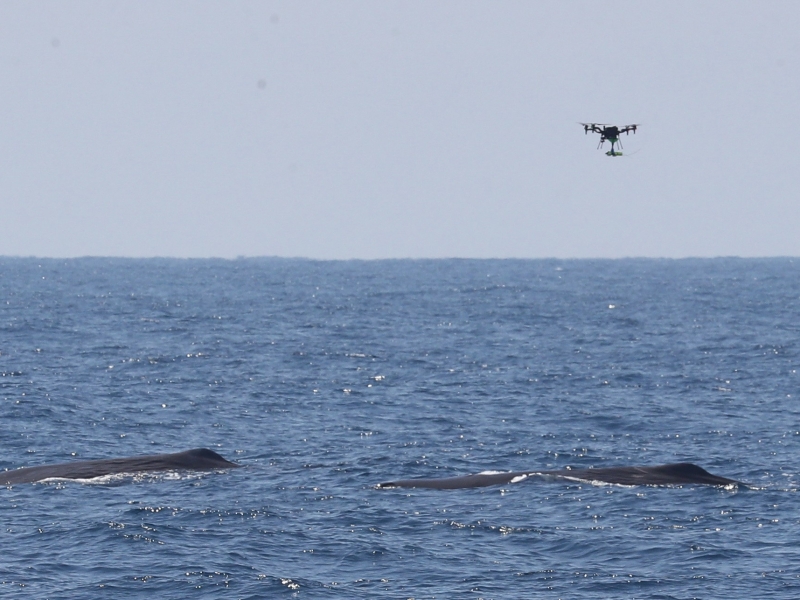
HDR-lead team encountered a group of mainly female sperm whales with calves on Mother's Day for the 2nd year in a row, and successfully deployed a tag from a drone. We believe it's the first CATS tag deployed on a sperm whale via drone.
Mesoplodon mysterioso
June 13, 2024
We are thrilled to be part of the "Mystery Mesoplodon Expedition" off the west coast of Baja California searching for an elusive new species of beaked whale. Read about the initial discovery and stay tuned for updates on this exciting expedition!
Whales of Summer
June 10, 2024
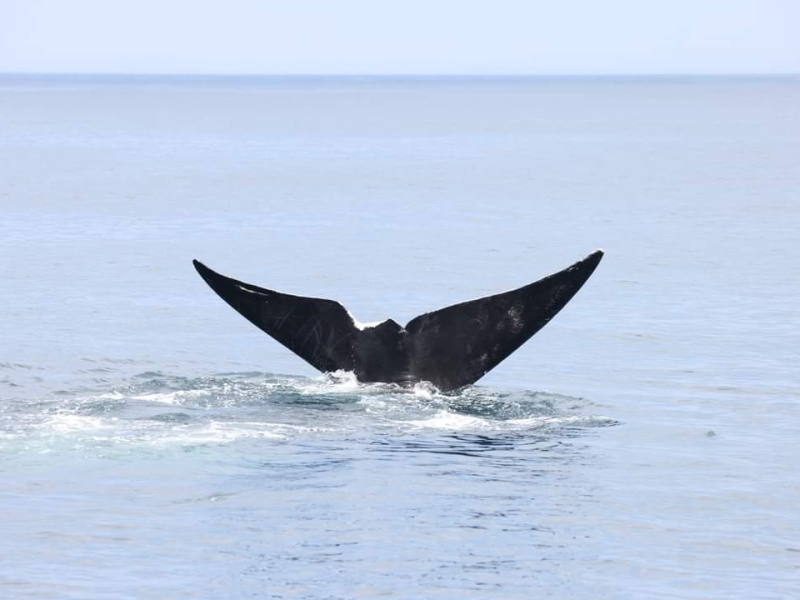
In the mid-Atlantic, baleen whale sightings typically occur during the colder months, with peak activity in December and January. Sightings of humpback and right whales usually decrease by late March through April. While occasional baleen whale sightings, particularly of fin whales, happen during warmer months, large groups are uncommon as summer approaches. Pelagic surveys during this time often focus on odontocetes like sperm whales and beaked whales.
New Right Whale Calf Seen Off Virginia!
June 3, 2024
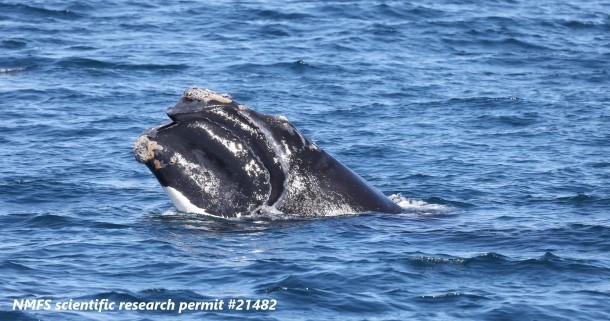
On Saturday 01 June 2024 during one of our offshore surveys 60 miles southeast of Virginia Beach, we encountered North Atlantic right whale Pico (Catalog #3270) and her calf!
Seal Tagged in 2022 is Back Again!
February 14, 2024
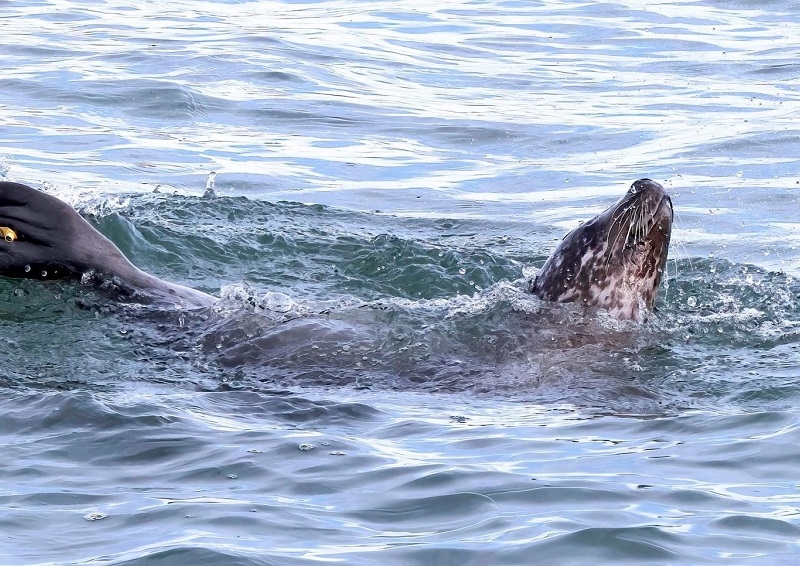
On 10 February 2024, a local wildlife enthusiast, Caroline Prevost, was out on the Chesapeake Bay when she observed some harbor seals enjoying time in the water near island 4 of the Chesapeake Bay Bridge Tunnel.
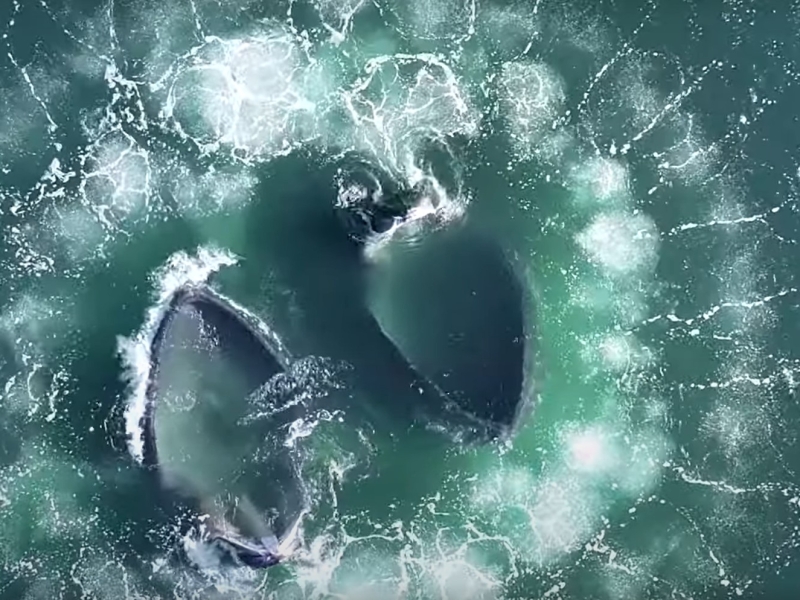
Using drones to study whales from a new perspective
November 21, 2023
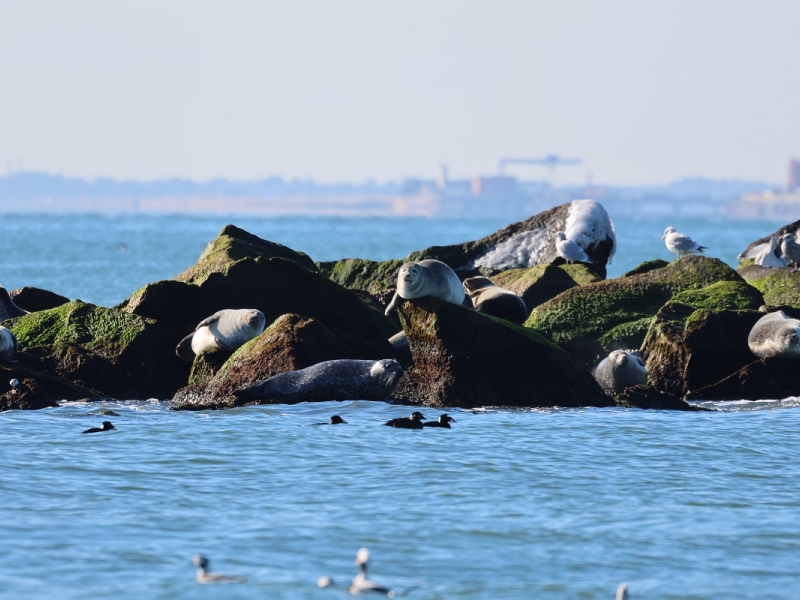
Small unmanned aircraft systems (sUAS) or “drones” are increasingly being used to study marine mammals from a different perspective.
Current
North Pacific Marine Mammal Species Distribution
Project Objectives
Develop a North Pacific-wide species distribution model for cetaceans
Complete
Hawaiian Monk Seal Tagging
Project Objectives
Investigate potential impacts of naval activities on Hawaiian monk seals
More details
Collapse details
Date Published:
Filesize:
- January 1, 2018
Passive acoustic monitoring was conducted using High-frequency Acoustic Recording Packages (HARPs) deployed in waters offshore of Virginia, North Carolina, and Florida with support from the US Navy during 2016 - 2017. The HARPs recorded underwater sounds between 10 Hz and 100 kHz. Data analysis consisted of analyst scans of long-term spectral averages (LTSAs) and spectrograms, and automated computer algorithm detection when possible. Three frequency bands were analyzed for marine mammal vocalizations and anthropogenic sounds: (1) Lowfrequency, between 10-1000 Hz, (2) Mid-frequency, between 1,000-5,000 Hz, and (3) Highfrequency, between 1-100 kHz.
- 5,208.04 KB
- Blue whale
- Bryde's whale
- Fin whale
- Minke whale
- North Atlantic right whale
- Sei whale
- Atlantic white-sided dolphin
- Blainville's beaked whale
- Bottlenose dolphin
- Clymene dolphin
- Common dolphin
- Goose-beaked whale
- Dwarf sperm whale
- False killer whale
- Gervais' beaked whale
- Killer whale
- Northern bottlenose whale
- Risso's dolphin
- Rough-toothed dolphin
- Short-finned pilot whale
- Sowerby's beaked whale
- Sperm whale
- Spotted dolphin
- Striped dolphin
More details
Collapse details
Date Published:
Filesize:
- July 30, 2009
In support of the U.S. Navy’s (Navy) Marine Mammal Monitoring Plan (M3P) in the Southern California Range Complex (SOCAL) (DoN 2009), aerial surveys were conducted by Marine Mammal Research Consultants (MMRC) and Smultea Environmental Sciences (SES) to monitor marine mammals and sea turtles (MM/ST) during June and July 2009 in the SOCAL area.
- 4,717.48 KB
Effects of duty-cycled passive acoustic recordings on detecting the presence of beaked whales in the northwest Atlantic.
Journal of the Acoustical Society of America. 2026.
140(1):EL31-EL37
More details
Collapse details
Date Published:
Publication:Ocean:Region:Species:Methods:
- March 2, 2026
This study investigated the effects of using duty-cycled passive acoustic recordings to monitor the daily presence of beaked whale species at three locations in the northwest Atlantic. Continuous acoustic records were subsampled to simulate duty cycles of 50%, 25%, and 10% and cycle period durations from 10 to 60 min. Short, frequent listening periods were most effective for assessing the daily presence of beaked whales. Furthermore, subsampling at low duty cycles led to consistently greater underestimation of Mesoplodon species than either Cuvier's beaked whales or northern bottlenose whales, leading to a potential bias in estimation of relative species occurrence.
Using passive acoustic monitoring to document the distribution of beaked whale species in the western North Atlantic Ocean.
Canadian Journal of Fisheries and Aquatic Sciences. 2017.
74(12): 2098-2109. https://doi.org/10.1139/cjfas-2016-0503
More details
Collapse details
Date Published:
Publication:Ocean:Region:Species:Methods:
- December 1, 2017
Little is known about the ecology of many beaked whale species, despite concerns raised by mass strandings linked to certain sources of anthropogenic noise. Here, we used passive acoustic monitoring to examine spatial and temporal patterns in beaked whale occurrence at six locations along the continental slope in the western North Atlantic Ocean.
More details
Collapse details
Date Published:
Filesize:
- January 1, 2020
Long-term high-frequency acoustic recording packages (HARPs) at eight sites along the western North Atlantic shelf break.
- 1,430.35 KB
- Blue whale
- Fin whale
- Humpback whale
- North Atlantic right whale
- Sei whale
- Atlantic white-sided dolphin
- Blainville's beaked whale
- Bottlenose dolphin
- Common dolphin
- Goose-beaked whale
- False killer whale
- Gervais' beaked whale
- Killer whale
- Northern bottlenose whale
- Pilot whale
- Rough-toothed dolphin
- Short-finned pilot whale
- Sowerby's beaked whale
- Sperm whale
- Spotted dolphin
- Striped dolphin
- True's beaked whale
Monitoring the acoustic ecology of the shelf break of Georges Bank, Northwestern Atlantic Ocean: new approaches to visualizing complex acoustic data.
Marine Policy. 2021.
Volume 130. DOI: 10.1016/j.marpol.2021.104570
More details
Collapse details
Date Published:
Publication:Ocean:Region:Species:Methods:
- August 1, 2021
This study aims to assess the co-occurrence of cetaceans and anthropogenic activities, presenting simple and accessible visualizations of the temporal and spectral overlap.