
Where’s Whaledo: A software toolkit for array localization of animal vocalizations.
PLoS Computational Biology. 2024.
20:e1011456
More details
Collapse details
Date Published:
Publication:Ocean:Region:Methods:
- May 20, 2024
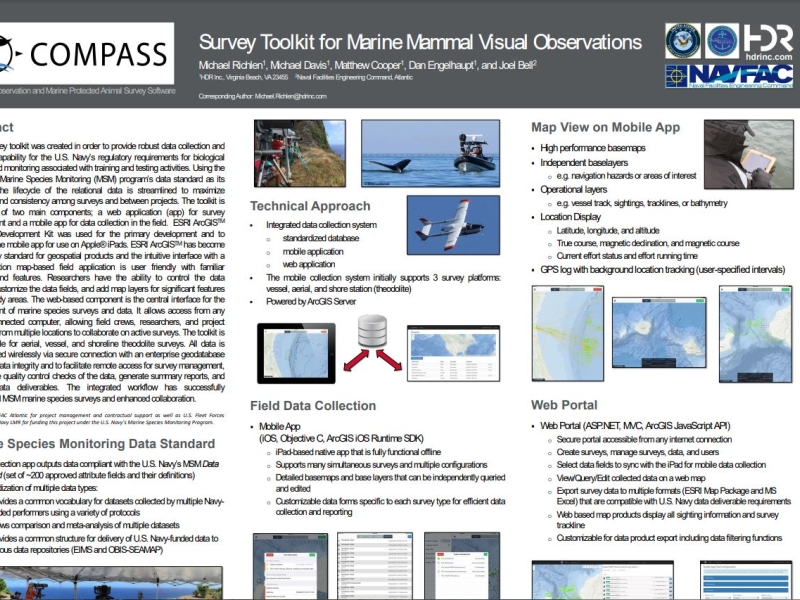
Where’s Whaledo is a software toolkit that uses a combination of automated processes and user interfaces to greatly accelerate the process of reconstructing animal tracks from arrays of passive acoustic recording devices. Passive acoustic localization is a non-invasive yet powerful way to contribute to species conservation. By tracking animals through their acoustic signals, important information on diving patterns, movement behavior, habitat use, and feeding dynamics can be obtained. This method is useful for helping to understand habitat use, observe behavioral responses to noise, and develop potential mitigation strategies. Animal tracking using passive acoustic localization requires an acoustic array to detect signals of interest, associate detections on various receivers, and estimate the most likely source location by using the time difference of arrival (TDOA) of sounds on multiple receivers. Where’s Whaledo combines data from two small-aperture volumetric arrays and a variable number of individual receivers
Complete
Atlantic Marine Assessment Program for Protected Species (AMAPPS)
Project Objectives
Assess the abundance, distribution, ecology, and behavior of marine mammals, sea turtles, and seabirds in U.S. Atlantic EEZ
Complete
Baseline Monitoring for Marine Mammals in the East Coast Range Complexes (aerial surveys)
Project Objectives
Assess occurrence, habitat associations, and density of marine mammals and sea turtles in key areas of Navy range complexes
Complete
Baseline Monitoring for Marine Mammals in the East Coast Range Complexes (vessel surveys)
Project Objectives
Assess occurrence, habitat associations, and stock structure of marine mammals and sea turtles in key areas of Navy range complexes
Current
Coral survey at Farallon de Medinilla
Project Objectives
Assess presence and status of ESA-listed corals at FDM
Complete
Effectiveness of Navy Lookout Teams in Detecting Cetaceans
Project Objectives
Obtain data to characterize the potential exposure of marine mammals and ESA-listed marine species to Navy training and testing activities, evaluate the effectiveness of mitigation measures
Complete
Guadalupe Fur Seal Satellite Tracking
Project Objectives
Determine the at-sea distribution of endangered Guadalupe fur seals and whether they travel through or utilize the offshore waters of the Southern California Range Complex and Northwest Training and Testing area
Complete
Mid-Atlantic Autonomous Passive Acoustic Monitoring
Project Objectives
Monitor large whale occurrence in the mid-Atlantic
Current
North Pacific Marine Mammal Species Distribution
Project Objectives
Develop a North Pacific-wide species distribution model for cetaceans
Current
Pacific Islands Comprehensive Stranding Investigations
Project Objectives
Conduct comprehensive investigations of stranded marine mammals throughout the Pacific Islands with emphasis on the Hawaiian and Mariana Island chains. This includes conducting necropsies of stranded animals, collecting and archiving samples, conducting disease screening, genetic testing, and analysis of historical data. The objective is to examine stranding patterns and causes of death for marine mammals in the Pacific Islands.
Complete
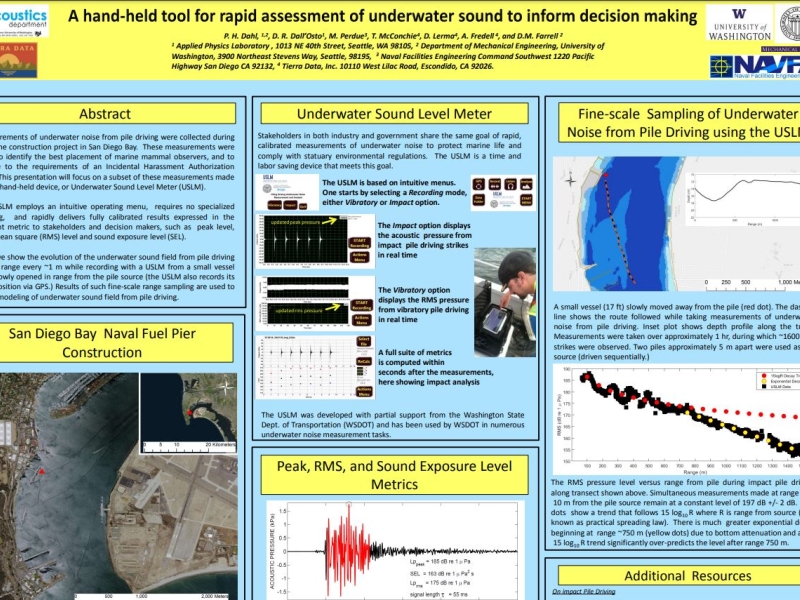
Sound source measurements from pile driving
Project Objectives
Determine the source levels produced by impact and vibratory driving of different size and material piles during construction projects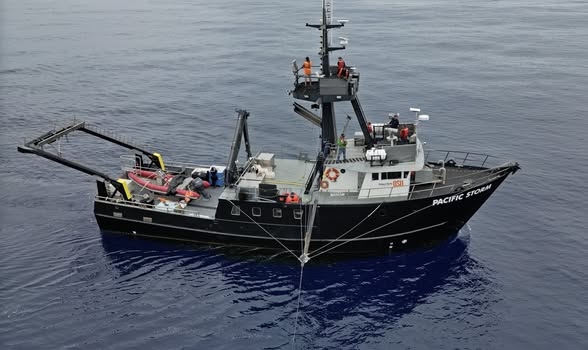
Mesoplodon mysterioso
June 13, 2024
We are thrilled to be part of the "Mystery Mesoplodon Expedition" off the west coast of Baja California searching for an elusive new species of beaked whale. Read about the initial discovery and stay tuned for updates on this exciting expedition!