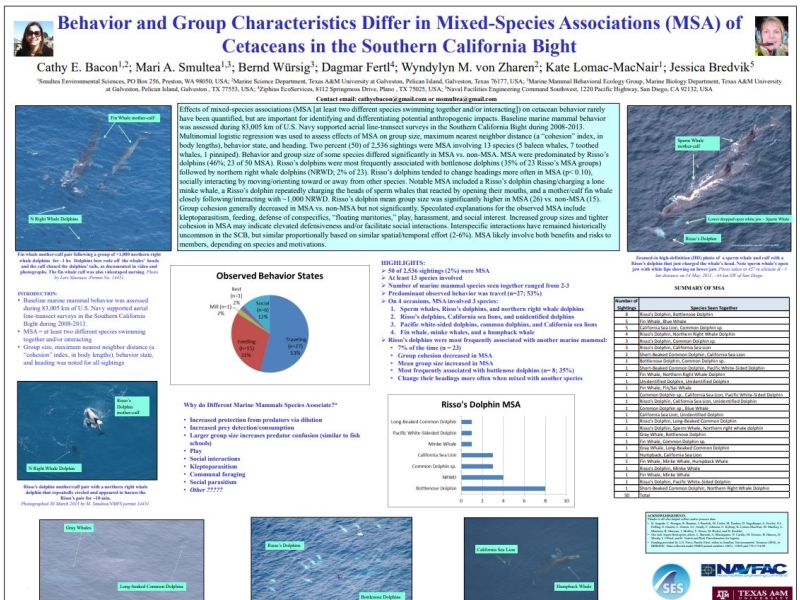

Where’s Whaledo: A software toolkit for array localization of animal vocalizations.
PLoS Computational Biology. 2024.
20:e1011456
More details
Collapse details
Date Published:
Publication:Ocean:Region:Methods:
- May 20, 2024
Where’s Whaledo is a software toolkit that uses a combination of automated processes and user interfaces to greatly accelerate the process of reconstructing animal tracks from arrays of passive acoustic recording devices. Passive acoustic localization is a non-invasive yet powerful way to contribute to species conservation. By tracking animals through their acoustic signals, important information on diving patterns, movement behavior, habitat use, and feeding dynamics can be obtained. This method is useful for helping to understand habitat use, observe behavioral responses to noise, and develop potential mitigation strategies. Animal tracking using passive acoustic localization requires an acoustic array to detect signals of interest, associate detections on various receivers, and estimate the most likely source location by using the time difference of arrival (TDOA) of sounds on multiple receivers. Where’s Whaledo combines data from two small-aperture volumetric arrays and a variable number of individual receivers
Complete
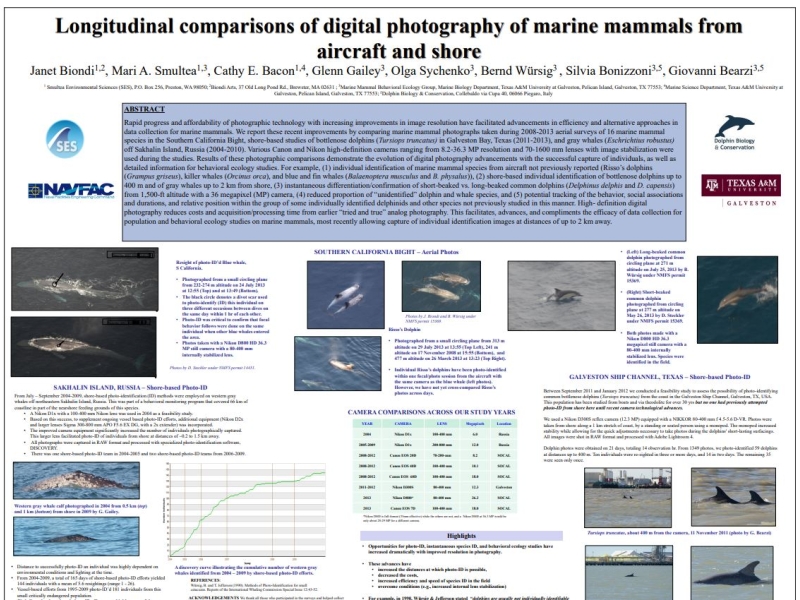
Aerial Surveys of Marine Mammals Conducted in the Inland Puget Sound Waters of Washington, summer 2013 – winter 2016
Project Objectives
1) Conduct aerial surveys during four seasonal periods within the inland Puget Sound Survey Area to assess potential differences in seasonal distribution, numbers, and behavioral state patterns of marine mammals; 2) Collect data to estimate densities of marine mammals in the inland Puget Sound waters for species with sufficient sightings; 3) Estimate abundance for each marine mammal species seen an adequate number of times; 4) Document the distribution and habitat use of each species observed; 5) Document and describe behaviors seen without performing focal follows.
Current
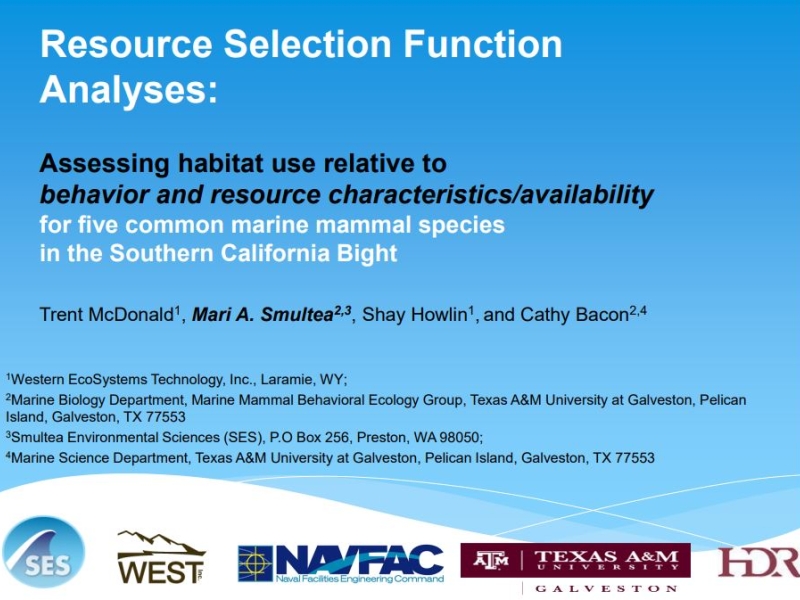
Marine Mammal Sightings During CalCOFI Cruises
Project Objectives
Determine what species and populations of marine mammals are present in Southern California and estimate the abundance and density across seasons
Complete
Passive Acoustic Monitoring of Marine Mammals in the Gulf of Alaska
Project Objectives
Determine the spatial distribution and occurrence of beaked whales, other odontocetes, and baleen whales in offshore areas using bottom-mounted passive acoustic recorders and deep-diving autonomous gliders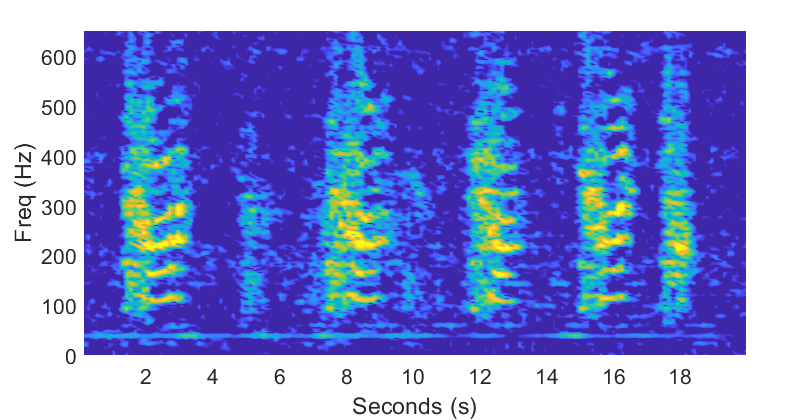
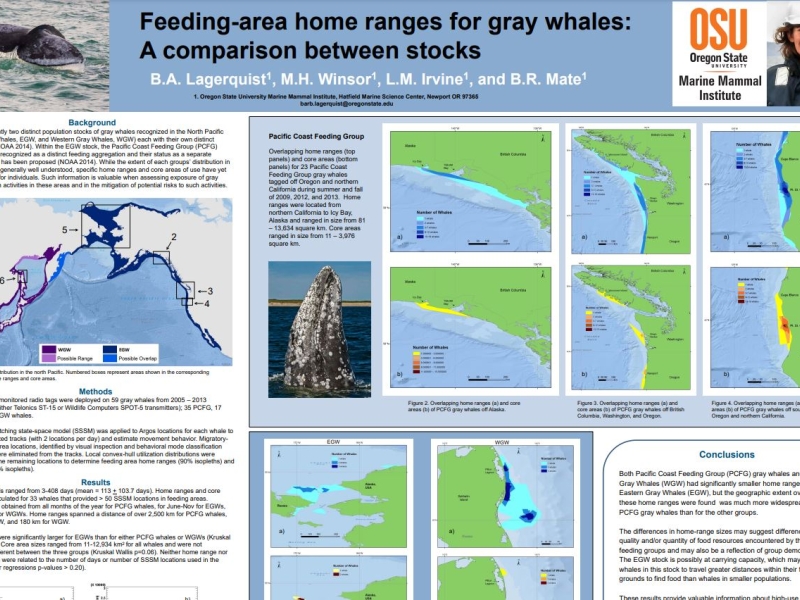
Western gray whale detections in western Pacific
June 8, 2026
Gray whale vocalizations are well-known and have been detected on mobile U.S. Navy passive acoustic monitoring (PAM) systems for decades. Gray whales produce highly variable and complex signals. Given some historical and conservation interest in the overall distribution and migratory patterns and behaviors of gray whales in the north Pacific, the Navy has conducted systematic monitoring for the calls of gray whales in times and areas that would inform species distribution patterns.