
More details
Collapse details
Date Published:
Filesize:
- July 1, 2025
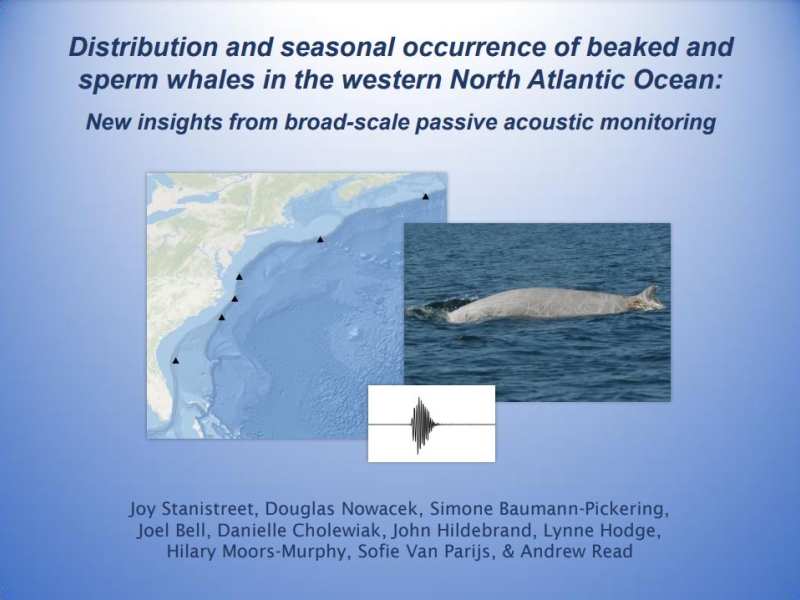
Beaked whales (Family Ziphiidae; Order Cetacea) are the least well-described group of marine mammals because they conduct very long deep dives, spend little time on the surface where they display cryptic behavior, and are difficult to identify due to the similarity between species. Beaked whales are also known to be susceptible to high-energy sound sources in the ocean (e.g. seismic research, sonars used by military activities).
- 1,136.54 KB
More details
Collapse details
Date Published:
Filesize:
- June 1, 2014
This report summarizes information from 24 U.S. Navy-funded aerial surveys of pinniped haulout sites in the inland waters of Washington State conducted between March 2013 and February 2014 by Washington Department of Fish and Wildlife.
- 2,946.44 KB
More details
Collapse details
Date Published:
Filesize:
- April 1, 2014
During this survey, the visual team surveyed 4,504 kilometers (km) of ‘full-effort,’ which included 349 km of ‘transit-effort.’ There was an additional 375 km of ‘fog-effort’ (transect and transit). Based on total effort, there were 802 sightings (1,998 individuals) of 13 confirmed marine mammal species, with an additional 162 sightings (228 individuals) of unidentified cetaceans and pinnipeds (including those recorded on transit and during off-effort mode).
- 12,416.19 KB
More details
Collapse details
Date Published:
Filesize:
- August 5, 2009
Aerial surveys were conducted in conjunction with two US Navy (Navy) Major Training Events (MTE) involving mid-frequency active sonar (MFAS) and explosives in October (Oct) and mid-November (Nov) 2008 in the Southern California Range Complex (SOCAL) off San Diego, California. The purpose of this survey was to monitor potential effects or lack of observable effects of MFAS and explosives on mammals and sea turtles (MM/ST) during a MTE from 17-21 Oct and beginning one day after a MTE from 15-18 Nov.
- 4,083.50 KB
More details
Collapse details
Date Published:
Filesize:
- August 6, 2025
The Alaska Fisheries Science Center (AFSC), NOAA Fisheries, with support from the U.S. Navy, conducted line transect surveys in Behm Canal and adjacent areas in the spring of 2023 and fall of 2024 to obtain estimates of density and abundance of cetaceans and information on marine mammal distribution and occurrence.
- 9,210.00 KB
Current
Acoustic Ecology of Northwest Atlantic Shelf Break Cetaceans and Effects of Anthropogenic Noise Impacts
Project Objectives
Assess the acoustic niche of marine mammal species and anthropogenic contributors to disturbance
Complete
Baseline Monitoring for Marine Mammals in the East Coast Range Complexes (passive acoustics)
Project Objectives
Assess occurrence, density, and vocal activity of marine mammals and sea turtles in key areas of Navy range complexes
Current
North Atlantic Right Whale Monitoring, Conservation, and Protection
Project Objectives
Assess occurrence, habitat use, and behavior of North Atlantic right whales in the mid-Atlantic region
Complete
Passive Acoustic Monitoring of Marine Mammals in the Gulf of Alaska
Project Objectives
Determine the spatial distribution and occurrence of beaked whales, other odontocetes, and baleen whales in offshore areas using bottom-mounted passive acoustic recorders and deep-diving autonomous gliders
Current
Southern California Beaked Whale Occurrence (formerly "Passive Acoustic Monitoring of Marine Mammals in Southern California Range Complex (SOCAL)")
Project Objectives
Determine the distribution and temporal patterns of beaked whale occurrence in the waters within and outside the Southern California Range Complex (SOCAL). Use passive acoustic monitoring to determine what species are present in SOCAL and examine spatial and temporal patterns.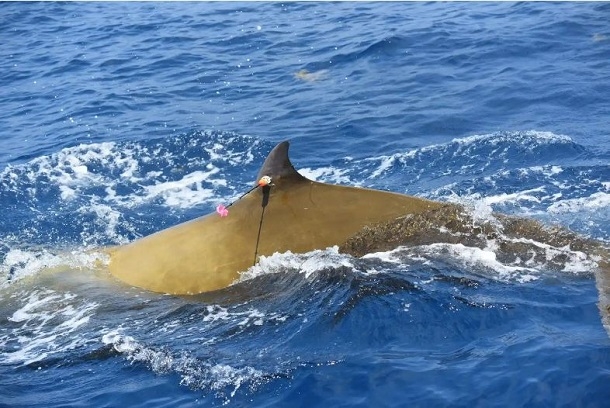
Successful CEE Trial with the USS Thomas Hudner
July 24, 2024
In July 2024, the Atlantic Behavioral Response Study, led by Duke University, conducted a successful controlled exposure experiment (CEE) involving the USS Thomas Hudner and tagged goose-beaked whales off Cape Hatteras. The study assessed the whales' behavioral responses to Continuous Active Sonar (CAS) signals, utilizing a High Frequency Recording Package (HARP) for sound recordings and coordination with the USS Thomas Hudner for sonar signal transmission. Preliminary observations suggested minimal behavioral changes in the focal whale, Zc150, during the experiment.