
Where’s Whaledo: A software toolkit for array localization of animal vocalizations.
PLoS Computational Biology. 2024.
20:e1011456
More details
Collapse details
Date Published:
Publication:Ocean:Region:Methods:
- May 20, 2024
Where’s Whaledo is a software toolkit that uses a combination of automated processes and user interfaces to greatly accelerate the process of reconstructing animal tracks from arrays of passive acoustic recording devices. Passive acoustic localization is a non-invasive yet powerful way to contribute to species conservation. By tracking animals through their acoustic signals, important information on diving patterns, movement behavior, habitat use, and feeding dynamics can be obtained. This method is useful for helping to understand habitat use, observe behavioral responses to noise, and develop potential mitigation strategies. Animal tracking using passive acoustic localization requires an acoustic array to detect signals of interest, associate detections on various receivers, and estimate the most likely source location by using the time difference of arrival (TDOA) of sounds on multiple receivers. Where’s Whaledo combines data from two small-aperture volumetric arrays and a variable number of individual receivers
Current
Green and Kemp's Ridley Turtle Tagging for Availability Bias Estimates
Project Objectives
Assess availability bias and habitat associations of endangered Kemp’s ridley and threatened green sea turtles to improve spatial density models
Complete
Lower Chesapeake Bay Sea Turtle Tagging and Tracking
Project Objectives
Assess ocurrence and behavior of loggerhead, green, and Kemp's ridley sea turtles in the Hampton Roads region of Chesapeake Bay and coastal Atlantic Ocean
Complete
Sea turtle tagging in the Mariana Islands Range Complex
Project Objectives
Develop a better understanding of sea turtle distribution and habitat use in the Mariana Islands, particularly in relation to locations used by the Navy for underwater detonation training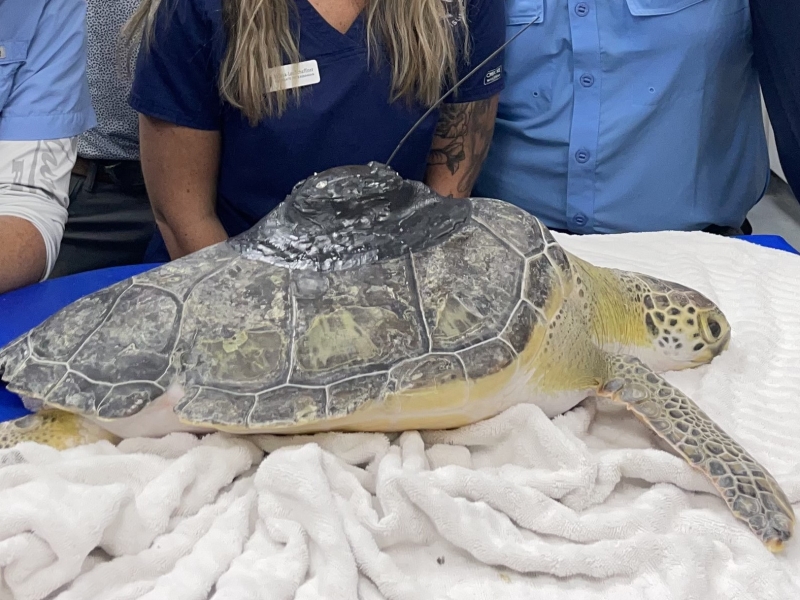
First Tagged Sea Turtle Released from Jekyll Island, Georgia
October 17, 2025
Collaborators at the Jekyll Island Authority in Georgia have released the first satellite-tagged green turtle in Georgia waters under the Navy’s “Green and Kemp's Ridley Turtle Tagging for Availability Bias Estimates” Project.
Green turtles are back on the Space Coast
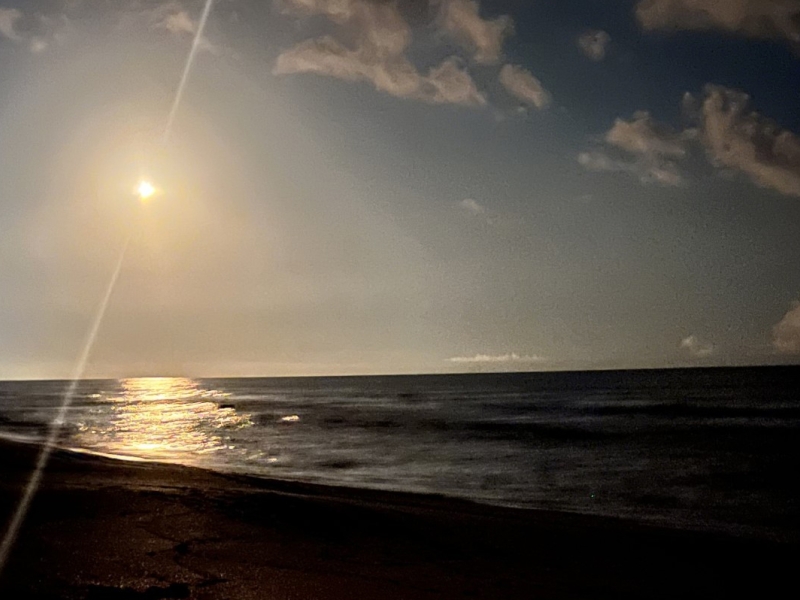
July 21, 2025
A field team led by co-Principle Investigator Dr. Kate Mansfield of the Marine Turtle Research Group at the University of Central Florida kicked off the second year of tagging for our “Kemp’s Ridley and Green Sea Turtle Tagging for Availability Bias Analysis” project.
Males have joined the turtle tagging party
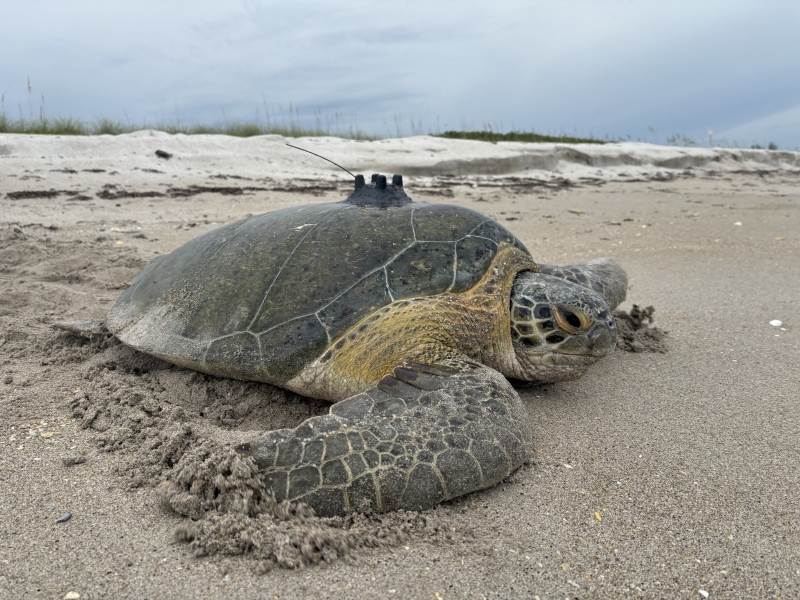
July 15, 2024
Researchers from Inwater Research Group (IRG), supported by Dr. Kate Mansfield of the UCF Marine Turtle Research Group and Andrew DiMatteo of CheloniData LLC, have deployed a satellite-linked data logger on an adult male green sea turtle in St. Lucie County, Florida. This initiative aims to study the diving behavior and habitat use of male green turtles along the U.S. east coast.
Back in the turtle tagging business
June 28, 2024
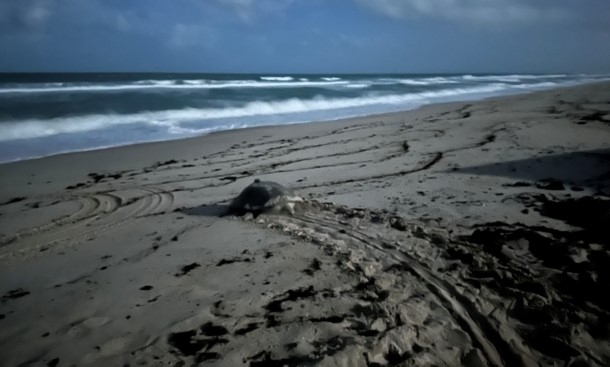
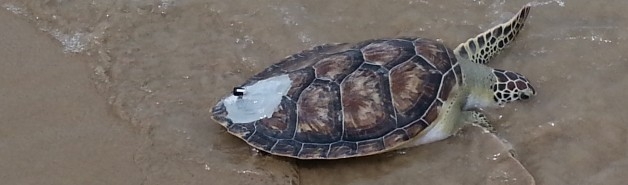
Researchers at the University of Central Florida (UCF), led by Dr. Kate Mansfield and supported by the UCF Marine Turtle Research Group and Andrew DiMatteo of CheloniData LLC, deployed five satellite-linked data loggers on adult nesting green turtles at the Archie Carr National Wildlife Refuge in Florida during the week of June 17th.
Atlantic sea turtle tagging project is underway!
July 17, 2013
The start of a new turtle project.
No related presentations or posters to display
